- Published on
AgentKit vs n8n: Predictability vs Flexibility
- Authors

- Name
- Chris
- @molehillio
Introduction
OpenAI just dropped AgentKit, a hot new visual automation framework. The automation community on social media has been ablaze with questions of whether this new framework might be the final winner in the automation game. In this article, we look into what AgentKit is, how it works, and how it compares to n8n. Though we cover n8n here, in reality this comparison holds for pretty much any other automation tool such as Make, or Zapier. If you want a practical view of how n8n and Make compare in a real workflow, check out our tutorials for n8n and Make.
This article contains affiliate links. If you sign up through our links, we may earn a commission at no extra cost to you.
What is AgentKit?
Let's answer the obvious question first. AgentKit is not actually a full workflow builder. This is a subtle, but important point that we will delve into deeper later. Having checked it out, the main difference here is that AgentKit is for building... well... AI agents. For those not as well versed, an AI agent is really a chat model that:
- Takes input from the user
- Has some guiding goal / instructions
- Has a set of tools it can use to try and achieve that goal
So for instance, a customer support agent might have a tool to refund a client, or change an order, or similar. Those familiar with n8n will already be acquainted with this concept via the AI Agent Node.
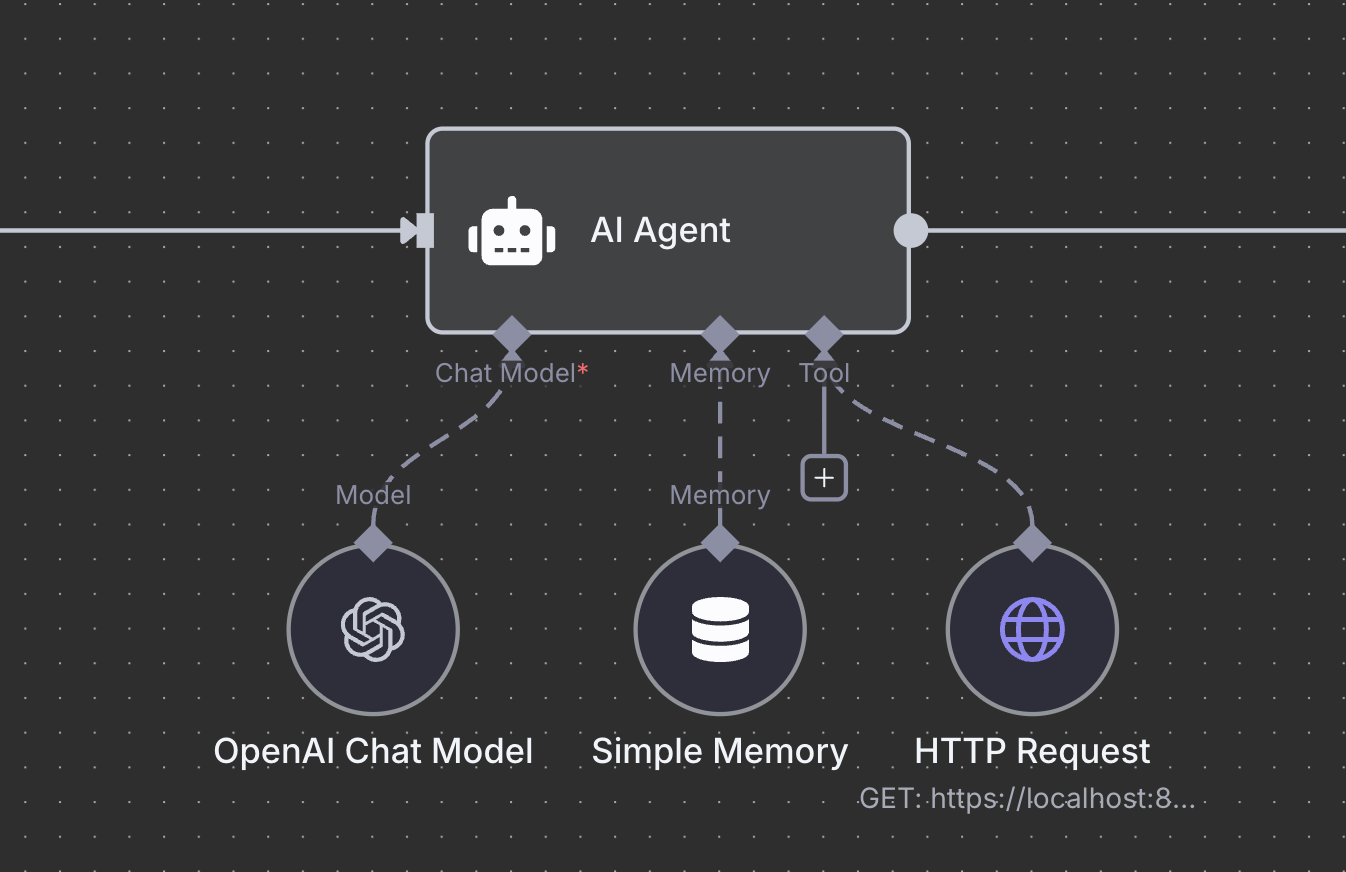
AgentKit's primary goal appears to be building these agents. So in other (n8n themed) words, it is the AI Agent Node, but on steroids.
The core offering of AgentKit consists of three parts, as described in their release:
Agent Builder
A visual builder for building AI agents. This is the part that everyone is comparing n8n to due to how similar they look.
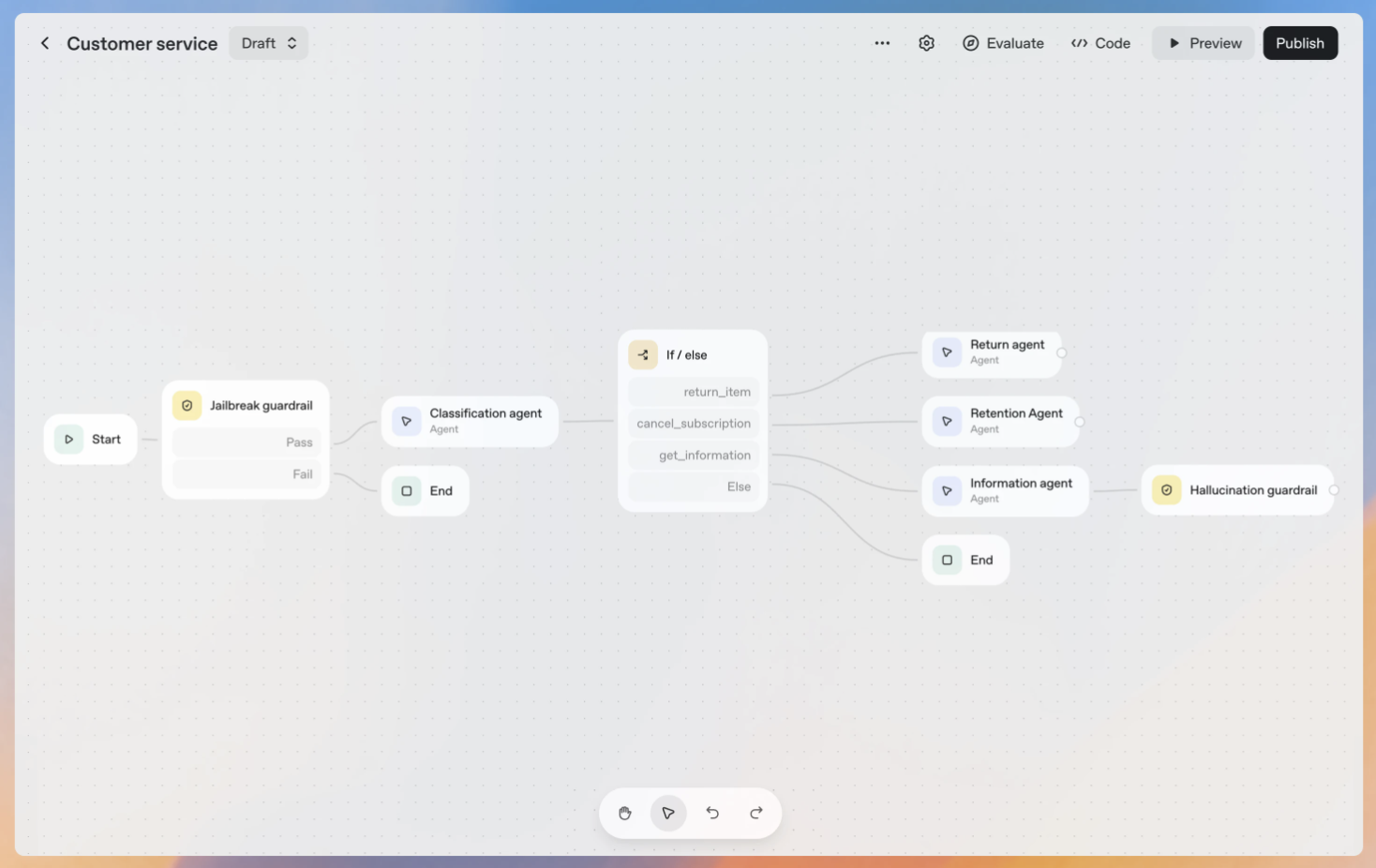
Anyone using n8n will be familiar with this setup, though arguably the level of complexity exposed here is much less.
Connector Registry
A central admin panel where data sources and external connections can be managed. This sounds vaguely similar to the credential store, though likely it is much more fine tuned in terms of what data is accessible. For enterprises this is a highly desirable feature due to data governance regulations and other requirements.
ChatKit
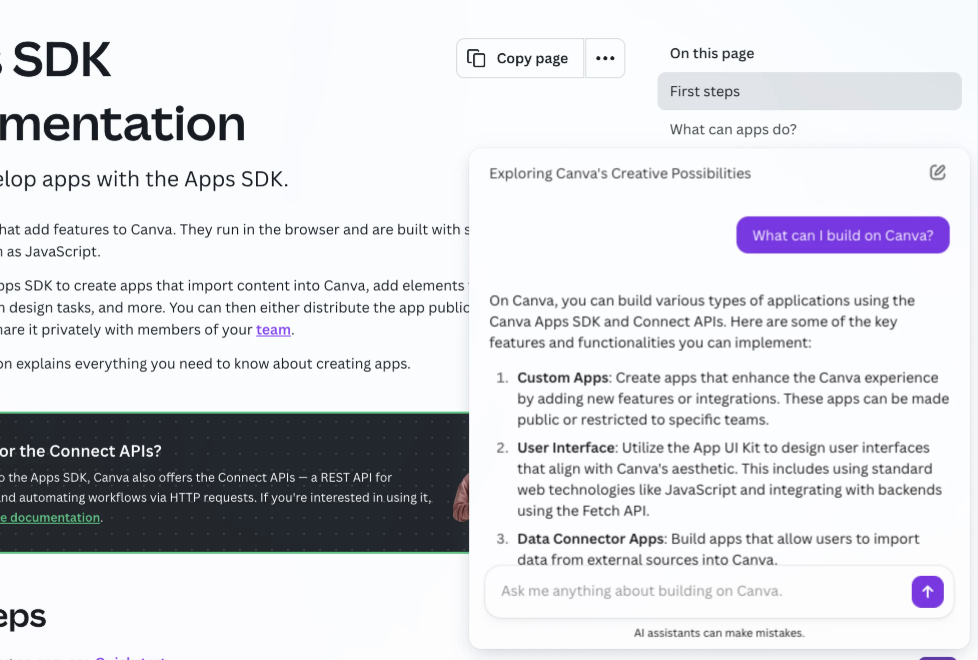
A toolkit that can be used for integrating the agent workflow into a website or app. This is useful for developers who want to create an easy to use chat mechanism on their site, without diving deep into the engineering of chat streaming, etc. You can find more info in their documentation on GitHub.
Availability
Access to the tool is currently possible if you have an OpenAI account, and have added a payment method. However, to run the preview you will need to verify your organisation. To get access to the Connector Registry, you will need to have an OpenAI Enterprise account.
Predictability vs Flexibility
A core focus of AgentKit is the aforementioned agents. Unlike in n8n, where the start of a workflow can be any number of things such as a timer, an email, or webhook, AgentKit has only one, which is a text string. Therefore, the entire system is geared around primarily chat messages (though in theory more could be added later).
There is a clear difference in approach to automation here. n8n approaches automation as deterministic. If the input is X, then the result is Y. Any time you give X, you get a Y. For business, having the same thing happen every time is extremely useful, and for "assembly line" type automation this works extremely well. n8n is a swiss army knife of different logic, connectors and components to make pretty much any type of automation not only possible, but predictable.
Of course, this has its limitations, especially when it comes to natural language. If your inputs are customer questions, then the correct choice starts becoming ambiguous. n8n offers AI Agents for this role, which allow some flexibility in handling these types of inputs, especially with the use of memory and tools. AgentKit it appears has leaned very heavily into this concept. In fact, their main node is the agent node, with connectors to other services (or MCP nodes as they are called) being primarily usable as tools for agents to use.
OpenAI appears to be banking on the idea that their AI will be eventually reach a level of predictability that makes this approach work just as well as the fully deterministic one. This idea is not unheard of even in the n8n world, where you see the occasional workflow that has been reduced to a single AI Agent node with a dozen tools attached.
AgentKit leans into this even further, by highlighting their performance evaluation & optimisation framework which allows builders to evaluate the performance of their agents, and optimise them to improve their accuracy. Logically, if you are going to go all out on agents such a framework is very much necessary. n8n by definition does not need this due to the inherent predictability of its workflows. The only place where this would make sense is for the AI Agent nodes, though arguably this could be done manually. Still, it is telling that this performance evaluation package is front and center of the offering.
Feature Comparison
UI / UX
Honestly, at this point AgentKit feels like a cutdown and smoothed version of n8n. The UI is clean and runs fast though, so no complaints there. Some of the core concepts are here such as nodes, connectors, context menus, and expressions, but they are far simpler. For instance, the full node menu contains only 11 nodes.
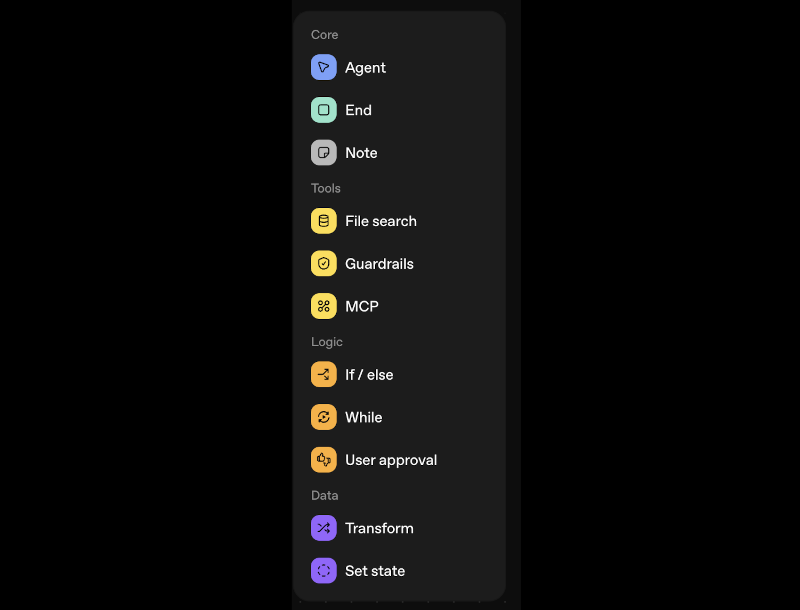
This is quite different from n8n, which has a node for just about every task. Here, it would seem that the goal is to lean heavily on the agent node to do the heavy lifting. This is also a bit deceiving, as actually much of the external connectivity tools are hidden in the MCP menu when adding an MCP node.
AgentKit also provides an expression mechanism that allows you to write basic logic. They use a language called Common Expression Language which is vaguely similar to JavaScript, though more limited.
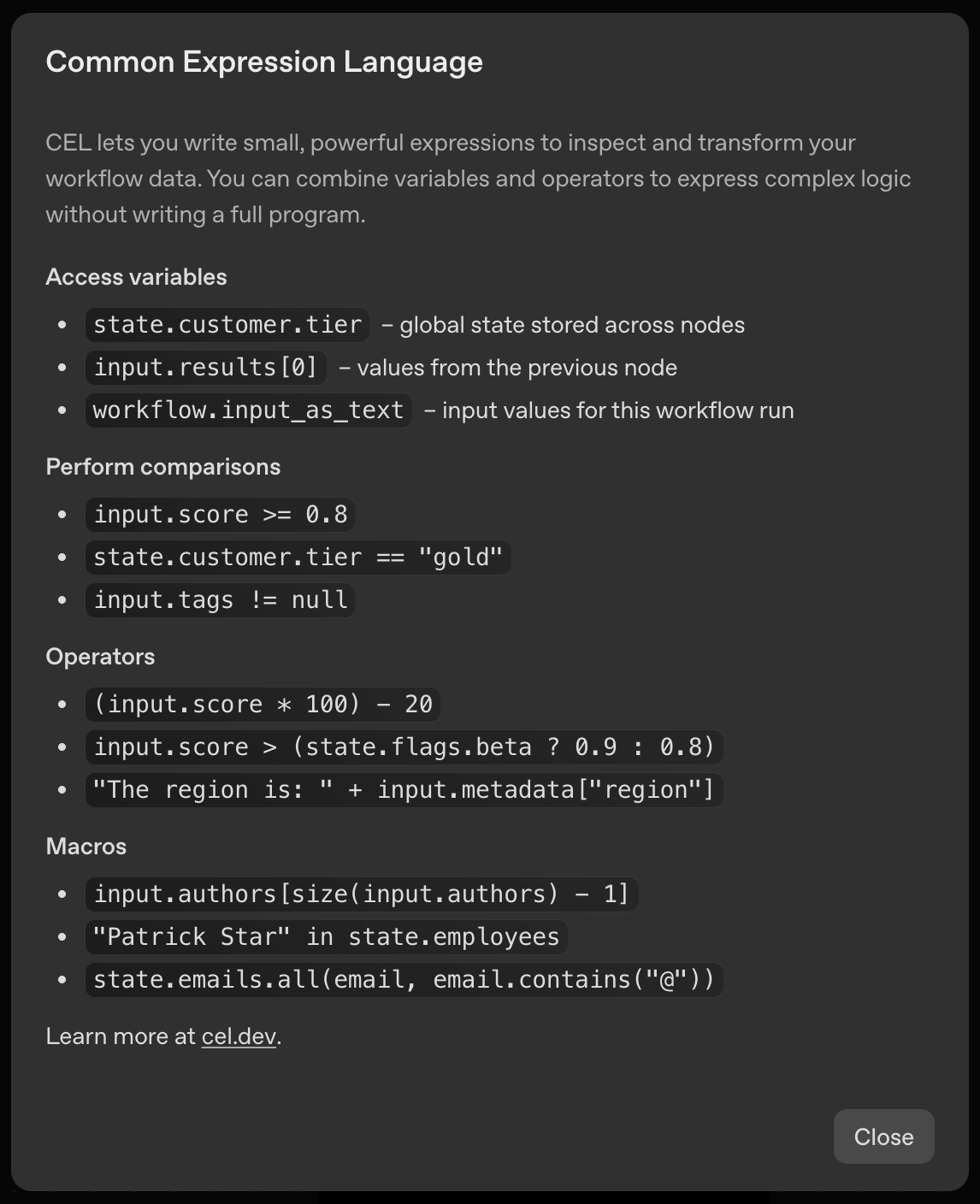
External Integrations
As mentioned earlier, the main way of interacting with external services is by using an MCP server. Basically, this is just the same as a Gmail Node, or DropBox node, or anything else. In fact, they have almost the same setup with each MCP tool having it's own list of actions it can carry out.
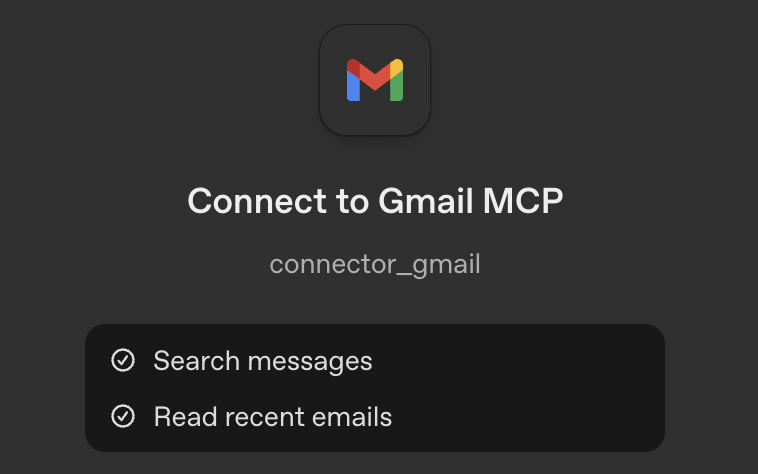
For instance, the GMail MCP can search messages, and read recent emails. This is pretty limited compared to the n8n version which has roughly 27 different actions and triggers that can be used.
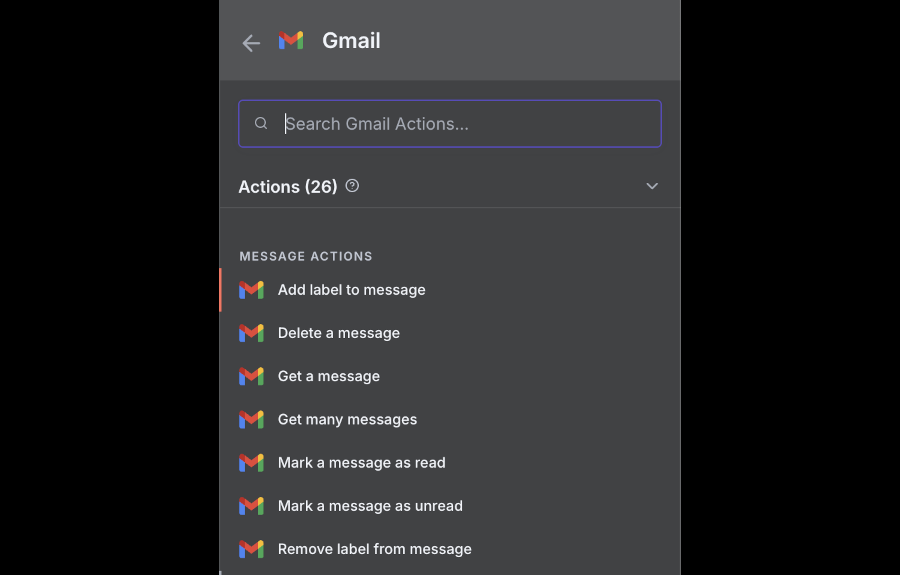
In terms of variety, I counted around 19 external connections available, mainly to big companies such as Google, Microsoft, or DropBox. This pales in comparison to n8n's 1000+ different integrations.
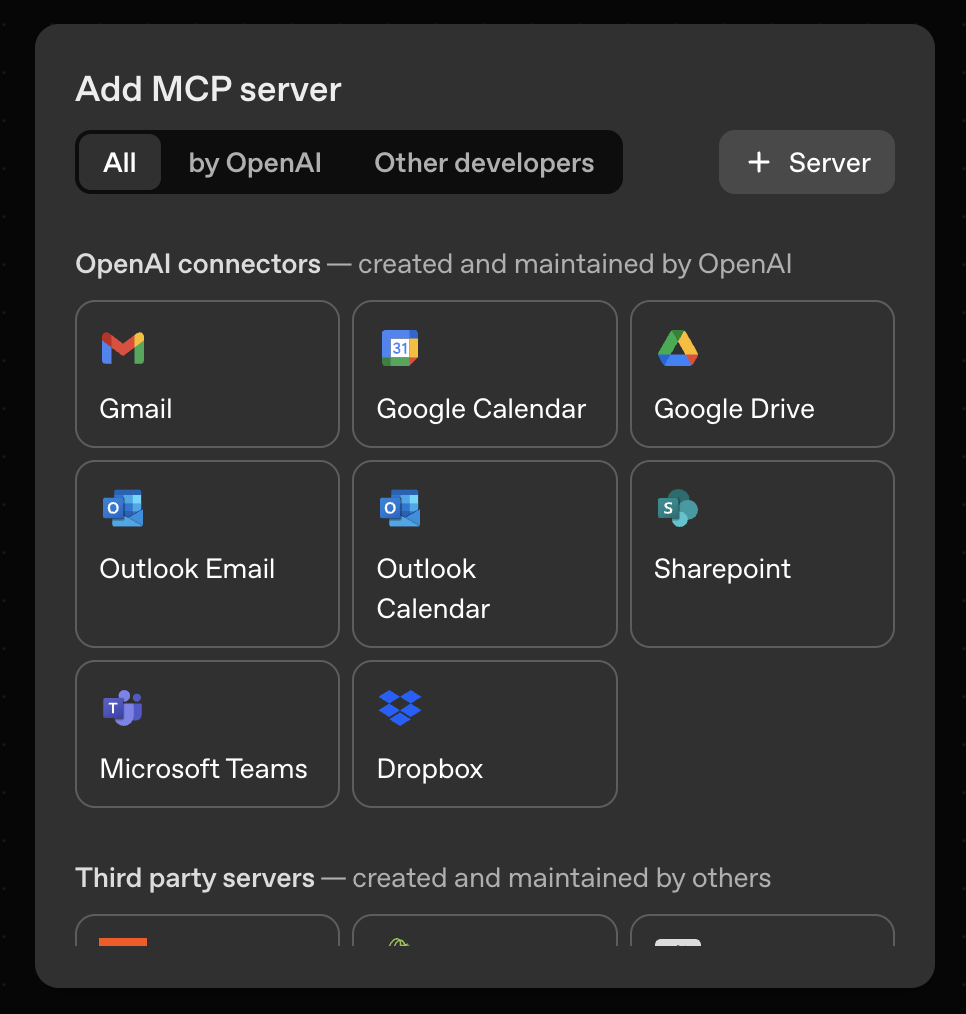
Having said that, adding more integrations is something that will keep happening, so likely more will be available in the future. Out of the gate however, it is pretty limited. AgentKit also offers the option to add other MCP servers, or write your own (somewhat analogous to using an external API, or writing your own n8n node).
Hosting
AgentKit is fully hosted by OpenAI on their infrastructure. When you publish a workflow, you are given a Workflow ID which is a string that can then be used with ChatKit, or custom code in order to interact with the agent workflow. This is somewhat similar to a webhook.
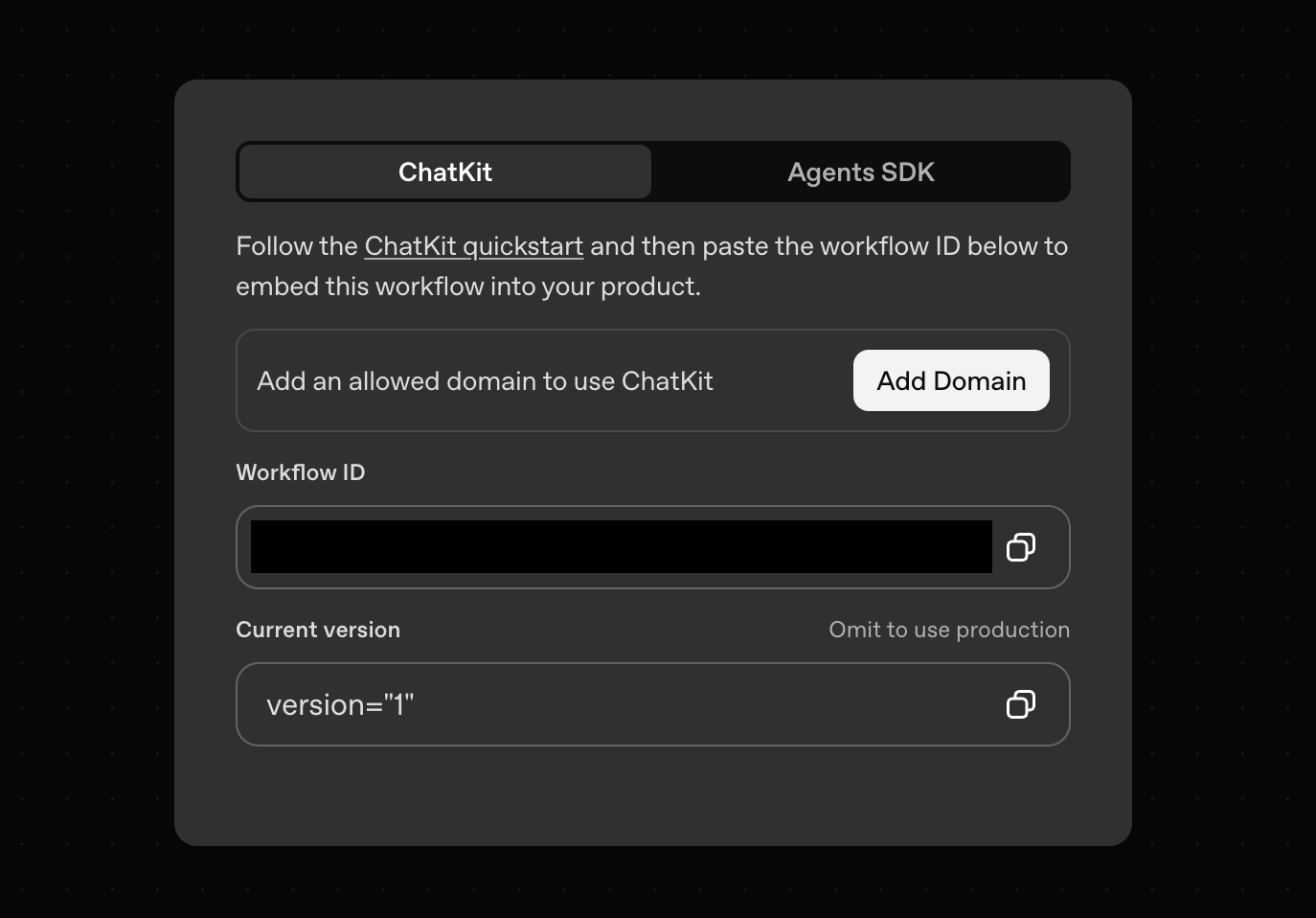
As of now, this is the only hosting option, and there is no self-hosted option available. In this sense, n8n has a sizable advantage for experienced users since it can be self hosted on your own infrastructure and run in whatever way is needed to meet any privacy or data requirements. Overall though the self-hosted aspect is more of a feature for power users, so for most regular users this will not move the needle either way.
Pricing
Interestingly, AgentKit is in effect "free" since the only cost appears to be the API cost for the models themselves. This makes comparing pricing slightly tricky. The Agent Builder itself is free as well as ChatKit which allows you to talk with it. However, something to keep in mind is that since the agent is the main component for building workflows, you will likely end up using API credits for pretty much every action. For API specific pricing you can check out the OpenAI pricing page.
n8n on the other hand is billed monthly or annually based on "workflow executions", which are counted each time you run your workflow. Each run can have unlimited steps. Note however that if any AI API calls are made as part of the workflow, either as an agent or as something else, that will add to the cost. For a detailed breakdown of all n8n tiers and pricing, see our complete n8n pricing guide.
So really it boils down to:
- How many agents would you need to make your workflow work
- How much context and info those agents would need to carry out those actions.
My suspicion is that if your workflows are not very AI heavy. Say, classic ETL where you are just moving and transforming data and acting on it, then your costs on n8n will be much cheaper. If you are relying a lot on agents, then possibly AgentKit with its tool heavy approach might be better.
Optimisation
AgentKit puts a lot of focus on how to optimise agents for accuracy. Indeed, one of the big issues with agent systems is that they can be susceptible to all of the usual AI pitfalls. Hallucinations and misunderstandings are common and can also be costly, especially when they occur in a serious business context.
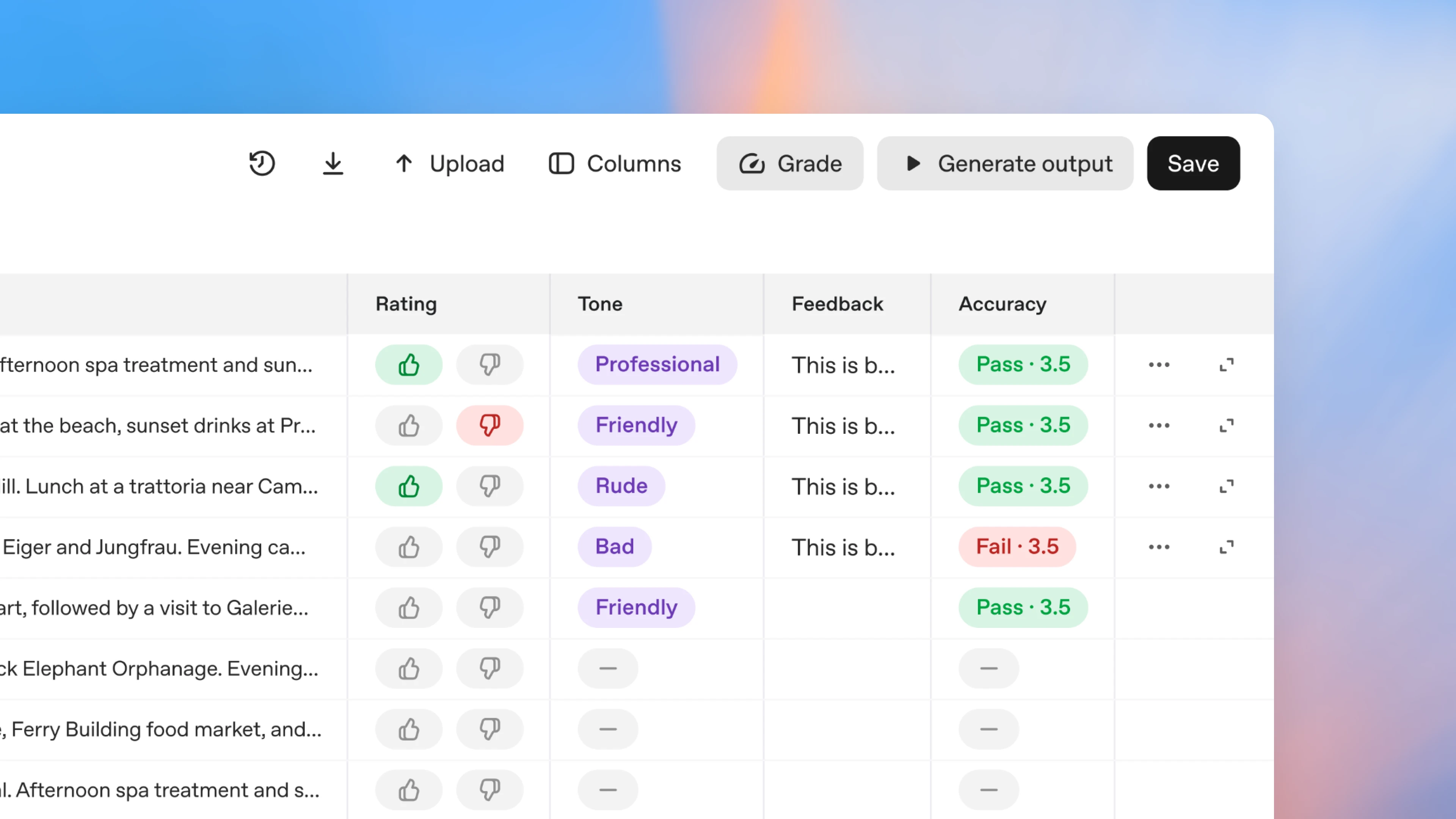
OpenAI already has a framework for this called Evals which allows for agent optimisation, and further features are being added to extend the framework. This includes Datasets for rapidly building agent evaluations, Trace Grading for running end to end agent assessments, Prompt Optimisation for improving prompts, and Third Party Model Support for testing non-OpenAI models.
n8n definitely does not have anything like this, mainly because agents are not the core focus. It is however an interesting concept that could be deployed for n8n as well. For instance, for seeing how effective a workflow is in responding to specific user inputs.
Data Safety & Guardrails
One of the tools that comes as part of AgentKit is the Connector Registry. I wasn't able to find a lot of detailed info about it, but it appears to be an enterprise feature that allows admins to manage exactly what data is available to agents, and how connections are made.
As mentioned this is similar to the credential store in n8n, though it is much more advanced in the sense that it allows more fine tuned access. For most regular users this will be of limited use, but for enterprise users this is generally pretty important due to data governance rules.
Additionally, AgentKit has guardrails built in for all of its AI models. Most AI models these days have guardrails, which are built-in instructions to, for instance, not discuss certain topics, or not provide certain sensitive information. For AgentKit, these guardrails can be added for various cases, such as detecting Personally Identifiable Information (PII), or looking for jailbreaks, etc. It is also possible to make custom guardrails using code.
Again, this is agent specific functionality so is not really something n8n needs to do. If needed, likely the same guardrails could be applied by using custom code, or instructions on the AI Agent node.
Is This the End for Automation Platforms?
Short answer, no. It seems to me that everyone got one look at the "boxes and lines" Agent Builder and immediately assumed that it was the same tool as n8n, which it is clearly not. There are certainly similarities, but fundamentally AgentKit is highly specialised at building chat agents, and providing them the tools to carry out various actions.
I believe it is certainly possible to build similar workflows in both tools, but the use cases are different. As mentioned, any workflow like, say, copying financial data, or doing calculations, or similar requires predictability, and is likely not to do so well in an agentic workflow. For cases such as this, n8n remains a much better choice both on availability of integrations and on price.
If your use-case is building a highly flexible AI Agent for handling chat messages for users, then AgentKit might be a good if not better option, given all of the specific features such as optimisation, MCP's and guardrails.
Frequently Asked Questions
What is OpenAI AgentKit used for?
AgentKit is a visual builder for creating AI agents, meaning chat-driven systems that take a user input, follow a set of instructions, and use external tools to carry out actions. Common use cases include customer support bots, data lookup agents, and task automation that requires natural language understanding. It is not a general-purpose workflow automation tool like n8n or Make, but rather a specialist tool for building conversational AI agents.
Is AgentKit a replacement for n8n?
No. AgentKit and n8n solve different problems. AgentKit is built specifically around chat-based AI agents where the input is always a text message. n8n is a general automation platform where workflows can be triggered by emails, webhooks, schedules, or dozens of other events, and produce fully deterministic, repeatable results. For classic "assembly line" automation, n8n remains the stronger choice. For building flexible conversational AI agents, AgentKit has purpose-built features like agent evaluation, MCP connectors, and guardrails that n8n does not.
Can AgentKit be self-hosted?
No. As of early 2026, AgentKit is fully hosted by OpenAI on their infrastructure, with no self-hosted option available. When you publish an agent workflow, you receive a Workflow ID that can be used via ChatKit or custom code. This is a meaningful limitation for businesses with data residency or privacy requirements. n8n, by contrast, can be self-hosted on your own infrastructure with no usage limits on the Community Edition.
How does AgentKit pricing compare to n8n?
AgentKit itself is free to use. The only costs are the underlying OpenAI API calls consumed each time an agent runs. This can seem cheap at first, but because almost every action in an AgentKit workflow is handled by an AI model, API costs can add up quickly for complex or high-volume workflows. n8n charges per execution (a single run of your entire workflow, regardless of how many steps it contains), so for workflows that are not heavily AI-driven, n8n is typically much cheaper. See our full n8n pricing breakdown for detail.
What is an MCP node in AgentKit?
MCP stands for Model Context Protocol. In AgentKit, MCP nodes are how agents connect to external services such as Gmail, Google Drive, Dropbox, and Microsoft. They function similarly to integration nodes in n8n, exposing a set of actions the agent can call as tools. As of early 2026, around 19 MCP connectors are available out of the box, which is limited compared to n8n's 1,000+ integrations. AgentKit also supports adding custom MCP servers, which is roughly equivalent to building a custom n8n node or calling an external API.
Does AgentKit support performance evaluation for agents?
Yes, and this is one of its standout features. AgentKit includes a built-in evaluation and optimisation framework (based on OpenAI's Evals) that lets you build test datasets, run end-to-end agent assessments, optimise prompts, and grade agent responses. This addresses one of the core challenges with AI agents, namely that they can hallucinate or misunderstand inputs in ways that are hard to detect without systematic testing. n8n does not have an equivalent feature, reflecting that agents are not its primary focus.